How AI RSVP Calls Change the Final Week of Event Operations
A practical look at how voice AI can reduce confirmation gaps and surface hospitality risks earlier.
Cam-Events AI Editorial6 min read
Why a digital form alone leaves operational gaps
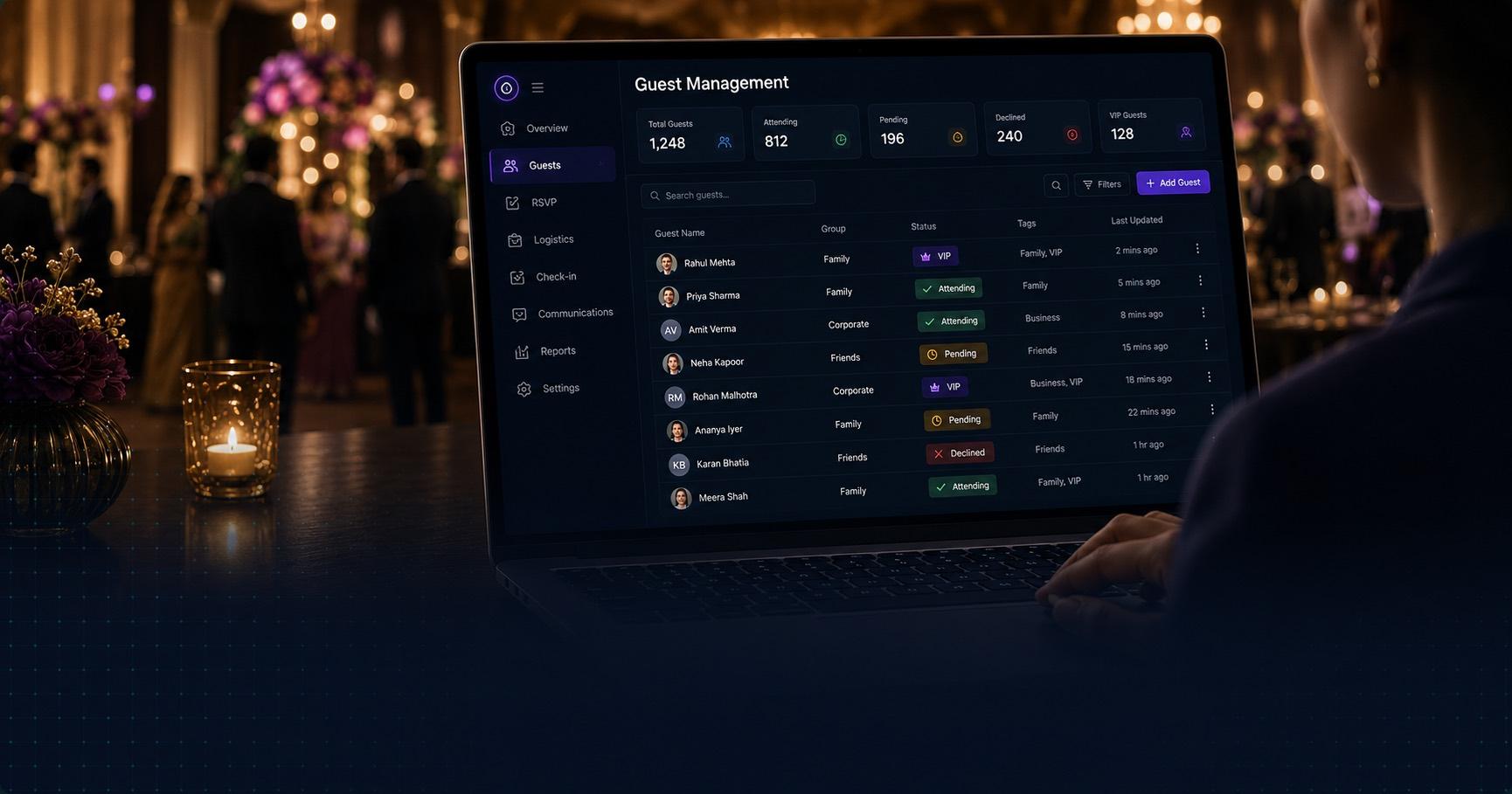
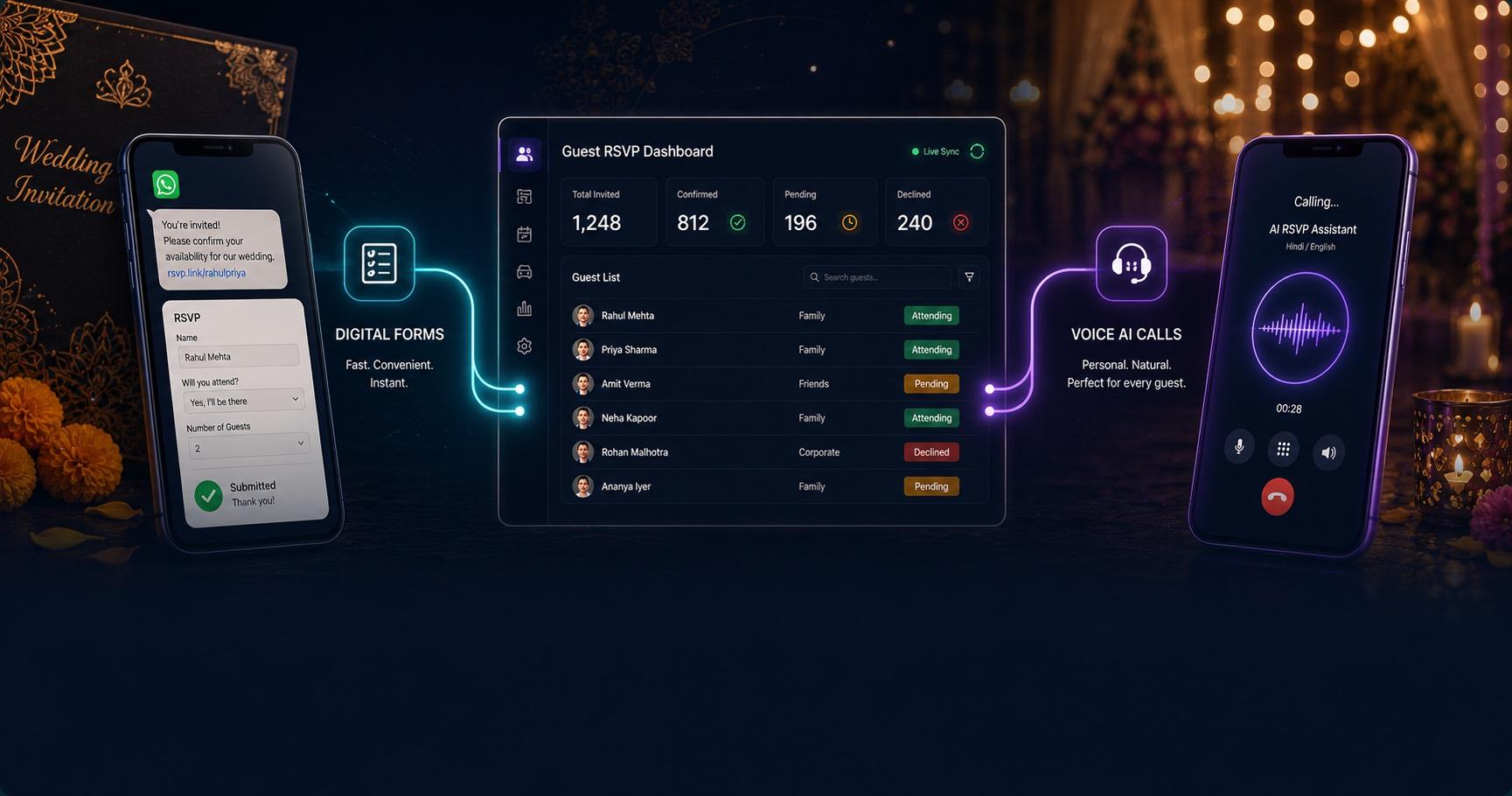
A digital RSVP form is efficient for guests who are comfortable opening links and completing every field. Large Indian weddings and corporate events also include guests who prefer a phone conversation, share one family contact, respond through an assistant, or postpone the decision until travel is clearer. A form-only process therefore creates a silent group whose status remains unknown.
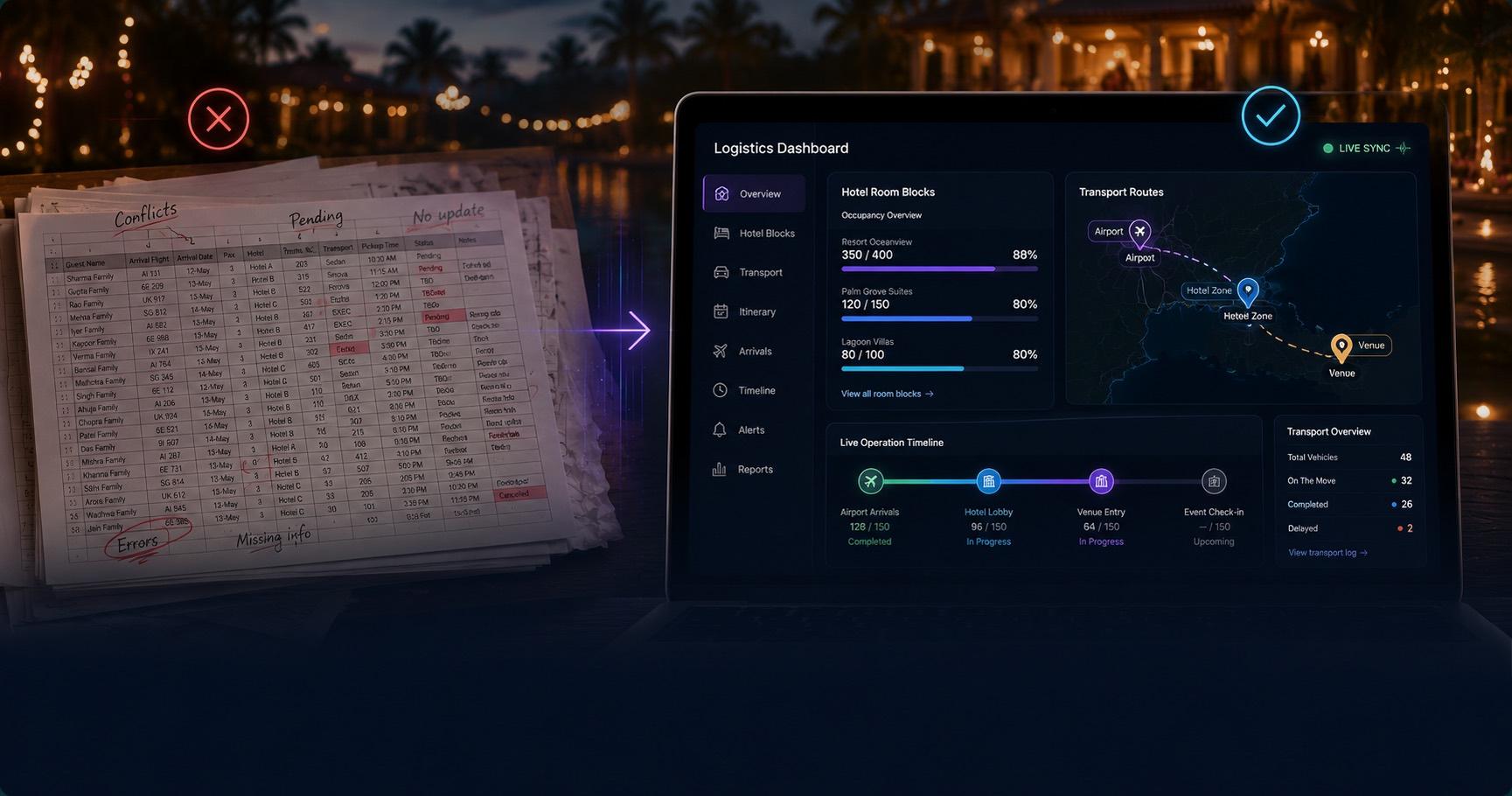
The operational cost appears later. Rooming teams cannot close inventory, transport teams do not know which arrival records are genuine, and hosts keep parallel follow-up lists in spreadsheets and WhatsApp chats. The goal of voice outreach is not to replace the form; it is to give the event team a controlled second channel for unresolved guests.
Prepare the guest list before making a call
Successful calling starts with data hygiene. Normalize mobile numbers with country codes, merge duplicates, identify the primary family contact, and separate guests who have already declined or opted out. Record where consent came from and keep a suppression list so a corrected spreadsheet does not accidentally re-enrol someone who asked not to be called.
Segment the list by language, host family, event function, and urgency. A guest waiting for a travel confirmation needs a different question from a guest who has never responded. Run a small internal test and then a limited guest batch before releasing a full campaign. This exposes pronunciation, caller identity, routing, and webhook problems while the affected audience is still small.
Choose IVR or conversational AI deliberately
Keypad IVR is appropriate when the question is narrow: press one to attend, two to decline, or three for a callback. It is predictable, easier to audit, and usually cheaper. Conversational AI is useful when guests may ask which function is being discussed, confirm a family count, change a preference, or explain that they need help with travel.
Do not make every call conversational merely because AI is available. Start with the smallest interaction that can capture a reliable decision. Give guests a clear way to repeat the options, reach a human, request a callback, or end the call. Scripts should introduce the event and organizer, state the purpose quickly, and avoid collecting sensitive information that the operations team does not genuinely need.
Use a respectful calling window and retry policy
Configure calling hours in the guest's local time and agree them with the event owner. A window such as 9:00 to 21:00 IST is a system boundary, not permission to call every guest at either edge. Agencies should choose a narrower event-specific window, account for senior guests, and avoid repeated attempts during ceremonies, travel, or known quiet periods.
Retries should be explicit: how many attempts, how far apart, and what happens after no answer, busy, failed, or callback requested. A campaign needs pause and cancel controls because the host may change the invitation plan while calls are running. Every automated outcome should enter a reviewable exception queue instead of disappearing into provider logs.
Store the response as operational data
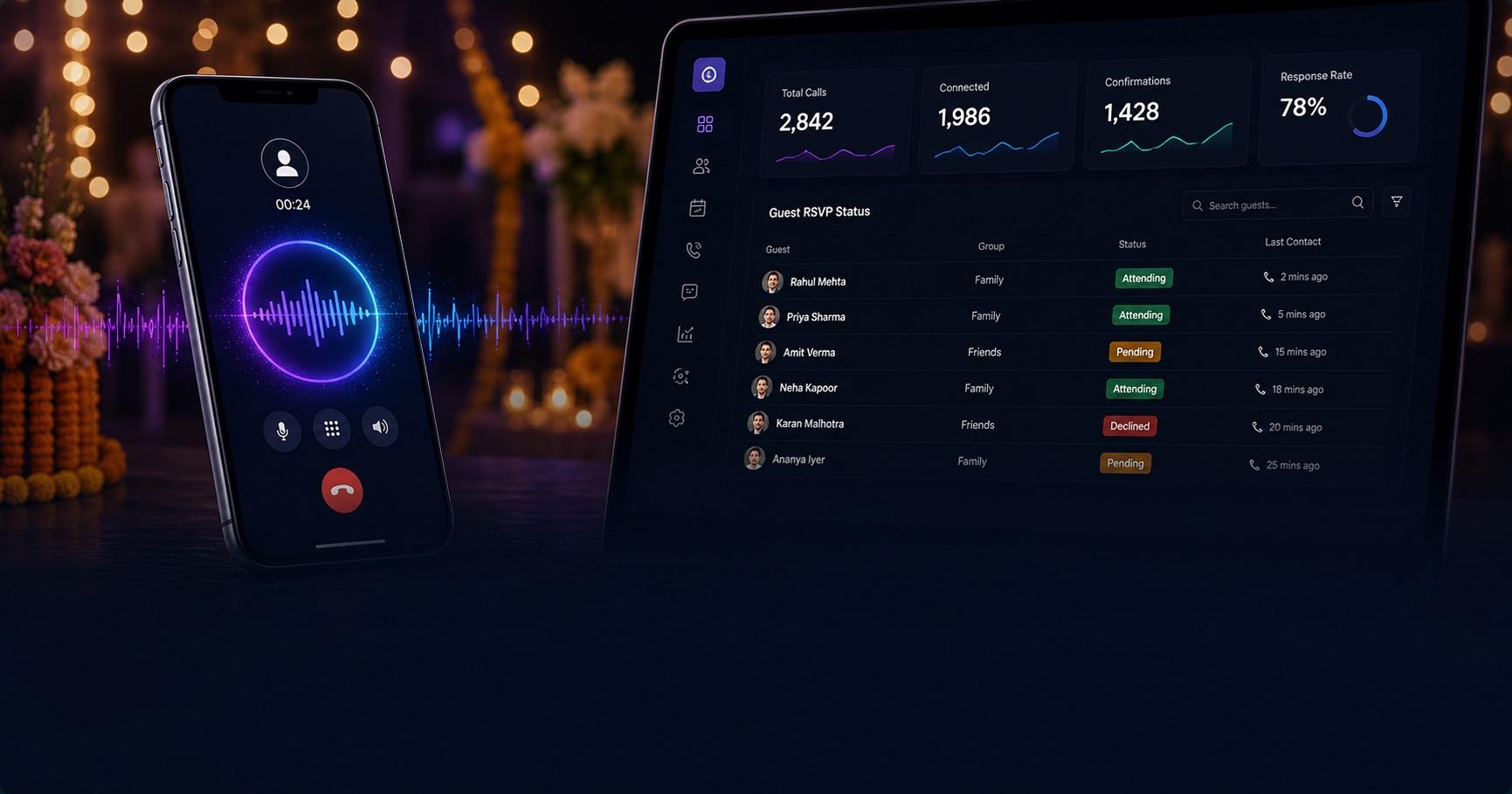
A call result is more than answered or failed. Store the provider call identifier, campaign and guest identifiers, attempt number, start and end time, duration, selected language, structured RSVP outcome, family count when confirmed, callback request, and the source of any manual override. Use signed webhooks and idempotency so repeated provider events do not create duplicate updates.
Keep transcripts and recordings only when the event has a defined purpose, notice, access policy, and deletion period. Most downstream teams need the structured outcome, not an unrestricted recording. A hotel user may need to know that two guests are confirmed and arriving late, while a transport user may only need the approved pickup details.
Connect RSVP to rooms, transport, and check-in
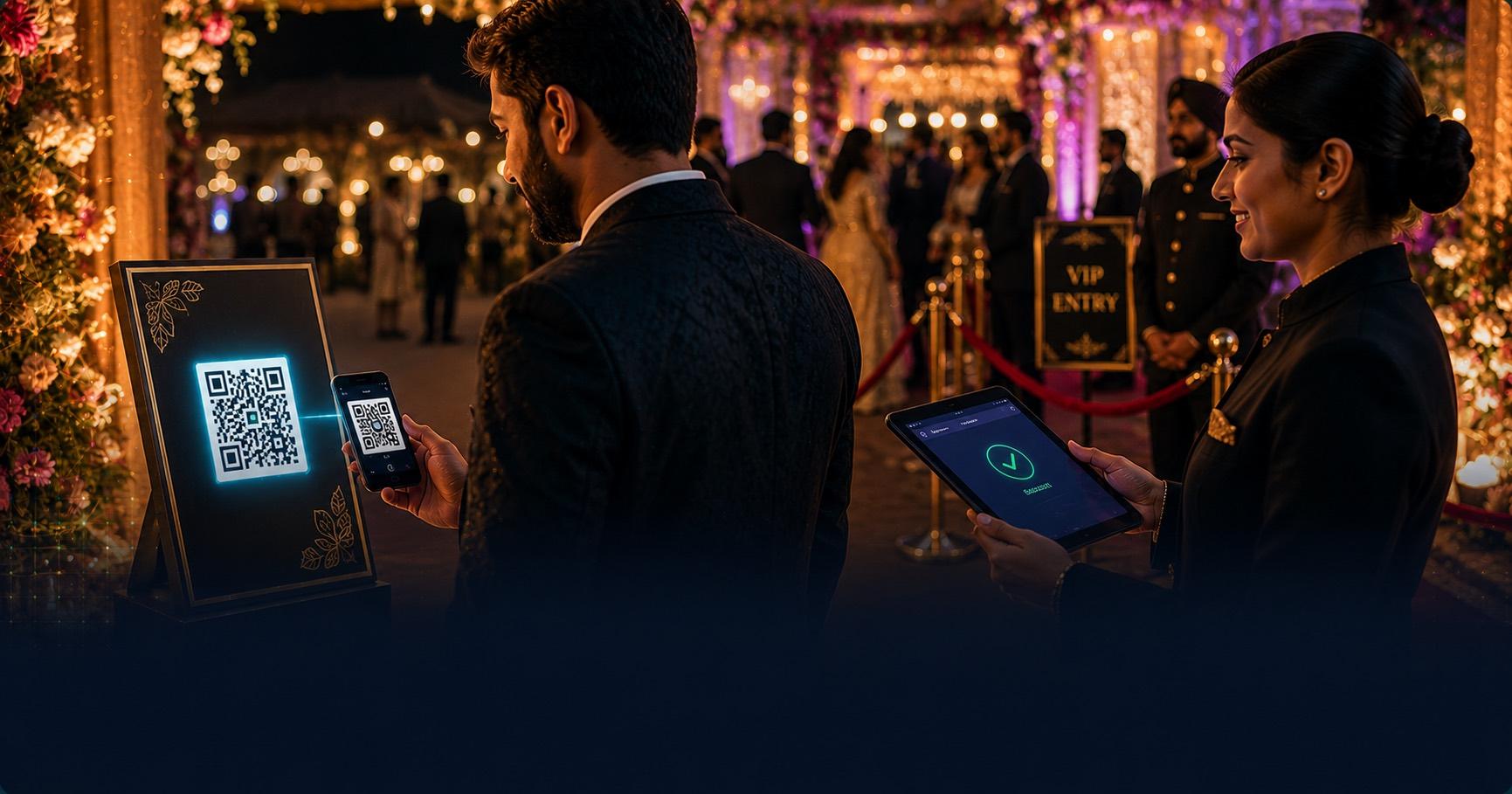
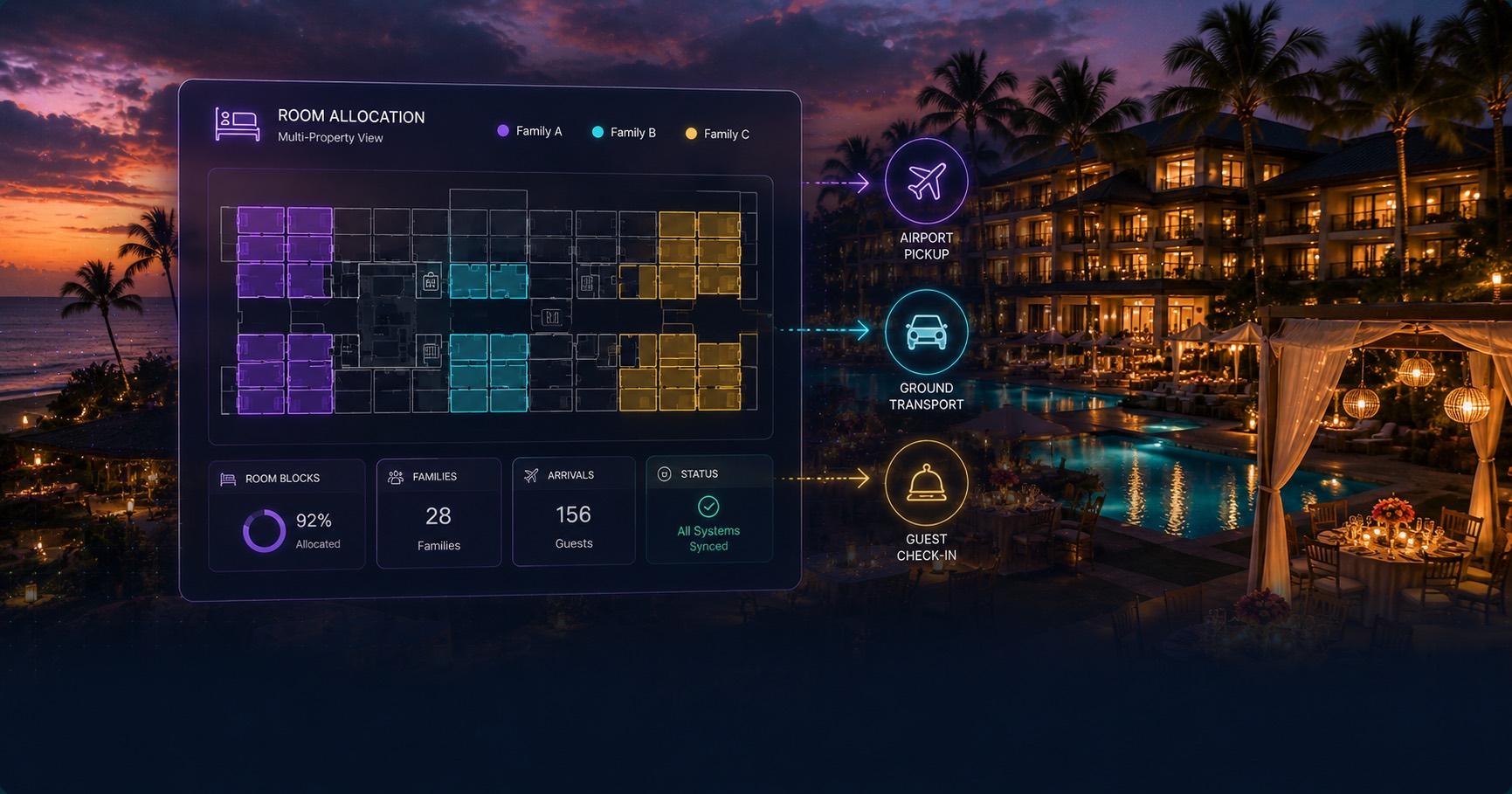
The value of voice confirmation appears when the response updates the same guest record used by hotel, transport, and check-in teams. A confirmed guest can enter rooming and arrival review; a decline can release tentative capacity; a callback request can become an owned task. Teams should see the latest status and its source instead of copying call results into another sheet.
Preserve human control. Hosts need to override a response, add context, and see who changed it. Field teams need an exception path when the arriving party differs from the confirmed count. The system should support hospitality decisions without pretending that a call outcome is always the final truth.
Measure the pilot by decisions, not call volume
A useful pilot measures how many previously unresolved guests produce a usable outcome, how many require a human callback, the time saved before rooming and transport cut-offs, opt-outs, provider failures, and cost per resolved guest. High call volume is not success if the team still reconciles results manually.
Review a small sample with the agency after the event. Compare automated outcomes with actual arrival and check-in records, identify confusing script moments, and adjust language, retry rules, and escalation ownership before the next event. That feedback loop is what turns a voice feature into a dependable operating process.